Recognizing Peptide Pureness: What 99%+ Truly Suggests
It is one reason appropriate peptide storage space and reconstitution practices issue. Partial peptide fragments can result from insufficient synthesis or post-synthesis degradation. These pieces are typically smaller sized than the target peptide and may elute at various retention times.These modifications alter the peptide's biological activity and chromatographic account. Peptides are delicate to temperature level, light, and enzymatic environments, making them prone to deterioration, which impacts efficacy. BOC Sciences offers accelerated security, light stability, and chemical degradation experiments to systematically examine formulation stability risks.
A useful assay determining downstream signaling-- or a structural research using NMR or X-ray crystallography-- demands the highest purity offered. Crystallographers specifically usually require ≥ 98% purity due to the fact that even minor impurities can avoid crystal formation or present condition right into the crystal latticework. As molecules exit the column, they go through a detector-- generally a UV detector readied to 214 or 220 nm, wavelengths where the peptide bond absorbs light highly. The detector records how much Peptide Distributor UV light is taken in with time, producing a graph called a chromatogram. This overview breaks down what pureness actually implies in peptide chemistry, just how it's measured, what the impurities are, and just how to read the documentation that confirms a peptide is what it claims to be.- For a 10-residue peptide with 99.5% coupling performance, you 'd anticipate about 95% of the final product to be the full-length sequence before filtration.The software attracts boundaries around each height and determines the location below.A certified lab complies with rigorous standards for examination accuracy and approach recognition.With our thorough peptide analysis system, Imaginative Proteomics has developed a highly delicate and customized platform.
What Do Purity Degrees 95%, 98%, 99% Mean?
If you have actually ever searched a peptide directory, you have actually seen pureness numbers almost everywhere. These numbers obtain thrown around so often that it's simple to play down them-- just an additional spec on an item web page. Chameleon Peptides sells study compounds exclusively for lab and analytical purposes. All PRG products are planned exclusively for in vitro research study or further production use. Making Scientific Innovation use of an extremely detoxified peptide reduces these dangers and improves the integrity of your data.Thorough Peptide Top Quality Screening Solutions
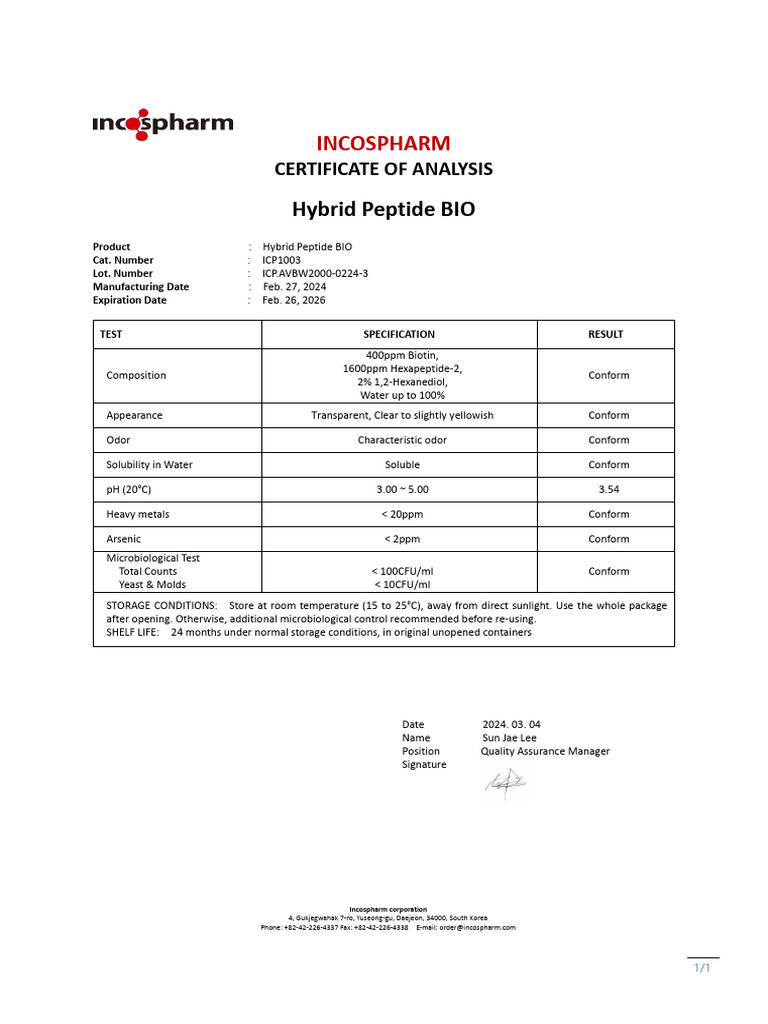
Along with HPLC and MS, specialized labs might employ orthogonal strategies for included accuracy. For example, capillary electrophoresis can be made use of to separate really hydrophilic peptides or to ascertain outcomes, and MALDI-TOF mass spectrometry can assist in mapping bigger or modified peptides. Many peptide manufacturers or distributors will certainly offer a COA (Certificate of Evaluation), as an example our bpc 157 tb 500 blend, that includes the pureness percent by HPLC and identification verification by MS for each and every batch. Top-tier labs often report peptide pureness well above 95%, often ≥ 98-99%, by utilizing cutting edge HPLC and MS analyses. They additionally evaluate both raw materials and finished peptide vials, which helps capture any type of pollutants, destruction products, or formulation incongruities.By insisting on peptides that come with verification of purity and identity, scientists can greatly minimize the risk of speculative artefacts. On the other hand, using peptides that have actually passed third-party laboratory validation aids make sure that the observed speculative results are absolutely because of the intended peptide and not due to pollutants or errors. When you see peptides advertised as "research-grade," it describes their meant use and the degree of manufacturing oversight. Research-grade peptides are made for research laboratory research study use just-- they are not generated under pharmaceutical GMP standards and are not suggested for usage as rehabs or in human beings. These peptides include a standard quality assurance package, typically consisting of HPLC pureness analysis and MS verification of identity, ensuring they satisfy scientific requirements for purity and structure.
Relied on labs use tested testing protocols to assess peptide examples and validate their purity and chemical composition. One core technique is High-Performance Liquid Chromatography (HPLC), the gold requirement for assessing peptide pureness. HPLC divides peptide combinations and can spot even minor pollutants below 1% of the sample [4] A common lab will certainly run the peptide with an HPLC system and generate a chromatogram-- the major peak represents the target peptide, and any additional heights indicate other substances. The pureness is after that evaluated as the percent of the main peak location versus total areas, providing a precise step of just how pure the peptide is [2]
We have the capacity of serving customers from very early peptide drug exploration stages to peptide evaluation. We provide all the technological details and guidelines for each action of peptide synthesis and analysis. The release procedure of peptide formulas is intricate, and a lack of scientific data hinders advancement. We establish artificial insemination release designs, providing full release curves and kinetic design analysis to optimize product design. One of one of the most usual resources of complication in peptide projects is using various high quality terms as if they indicate the very same point. Additionally, bear in mind that "research-grade" peptides are indicated for the laboratory bench and come with high purity and identification checks yet are not created as medicines. Constantly inspect that your peptide comes with correct logical information (HPLC chromatogram and MS results) and is classified for study usage. Equipped with this expertise, you can confidently interpret tags like "95% purity, study grade" and utilize those peptides to drive your experiments without confusion. Expertise of purity levels will also guide you if you ever need a higher purity peptide for an especially sensitive assay. Ultimately, getting the purity level right means extra dependable scientific research-- which's the utmost objective for any kind of scientist. With years of analytical testing experience and progressed tool systems, BOC Sciences gives extensive peptide top quality screening services across the entire process from resources to formulations. 